RAD Roller Therapy Balls
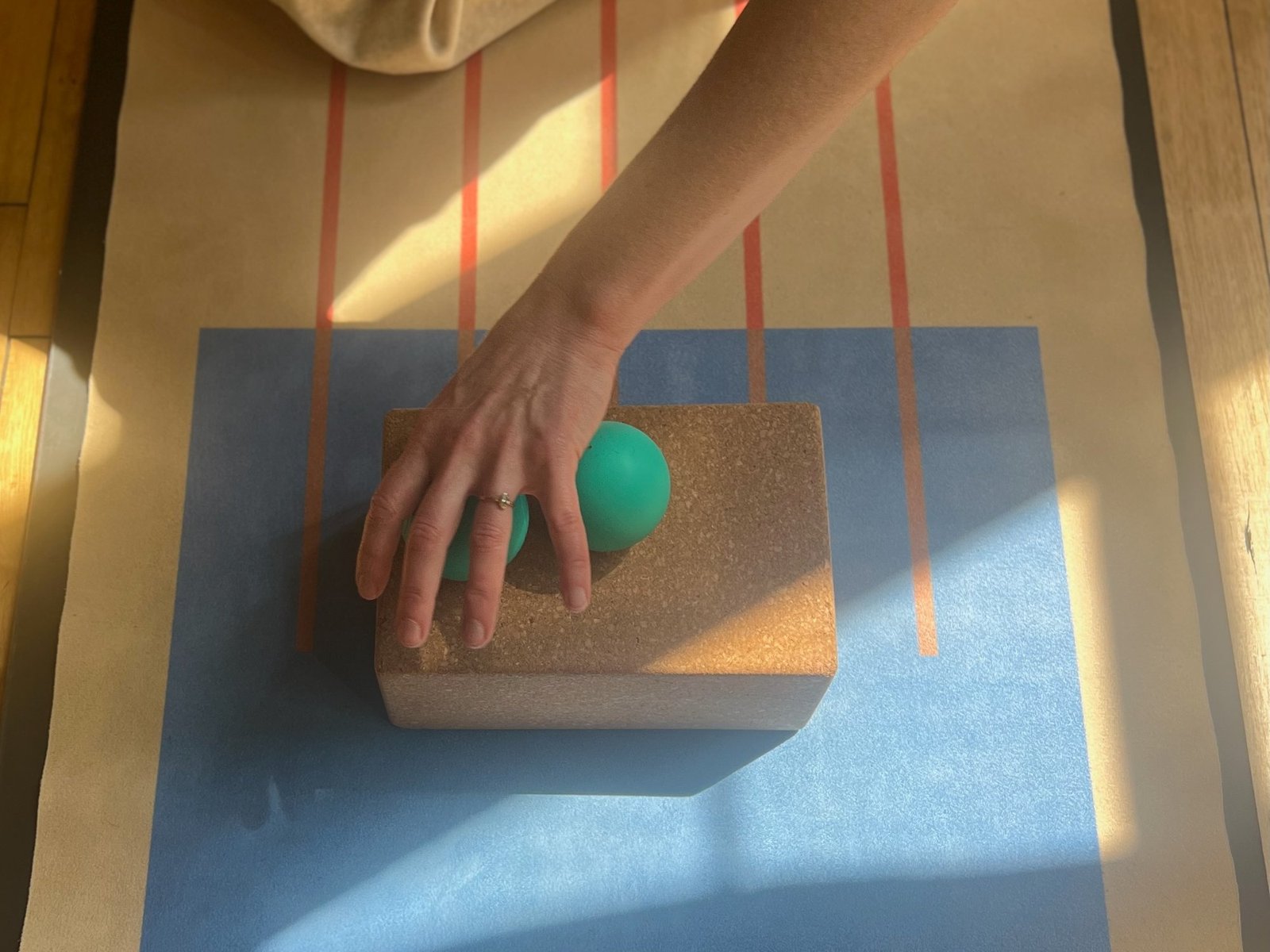
Tennis balls are a great place to start — they're inexpensive and you probably have them already. But if you've established a self-myofascial release practice and want to invest in proper therapy balls, RAD is my go-to. Soft medical-grade silicone in different sizes and densities gives you a more responsive, precise tool than a tennis ball — from the soles of your feet to the base of your skull.
I'm happy to offer a discount through my affiliate link — this is a sponsored relationship, but it's also a product I genuinely use in my own practice and every class.
Shop RAD Roller — $5 off →Manduka AligN Yoga Strap — 10'
I love this strap specifically in 10 feet — the generous length matters for some of the yin shapes we work with, where a standard 8-foot strap just doesn't give you enough room. The buckle design is well-thought-out and makes adjusting while you're in a pose genuinely easy. Made from 100% natural cotton.
These are currently in the "Last Chance" section of the Manduka site, which worries me a little — I think they're perfect and hope they stay.
View at Manduka →Mocana High-Performance Yoga Mats
Created by Chicago yogi Bianca Hull, Mocana began in Cape Town with an intention to support practice without excess. The mats feel grounded under hands and feet, with beautiful colors that are considered rather than trendy. PVC-free, made without toxic inks or glues, and designed to biodegrade over time — reflecting the same care many of us try to bring to our practice and to the planet. Durable, beautiful, and easy to carry.
View Mocana mats →Nimbo Alto Cork Mat
At home I've used Nimbo Alto mats for years. My main one is their thicker cork mat — all-natural cork and rubber — which feels especially comfortable for rolling work in Pilates and for home practice.
I also still have an early version of their thin travel mat. It's lasted through years of use, takes up almost no space in a suitcase, and I often use it over the bed on my Pilates half-cadillac or layered over an old hot yoga mat I can't quite part with.
I've long admired Nimbo Alto cofounder and artist Alyson Fox, whose gorgeous design sensibility is evident in the materials and the aesthetic. The mats feel simple, durable, and thoughtfully made.
View Nimbo Alto →Props You Likely Already Have
You don't need to buy anything to begin. A rolled blanket works as a bolster. Thick books substitute for blocks. A robe belt or scarf replaces a strap. Two tennis balls tied in a sock give you a peanut-shaped tool for spine work that costs almost nothing. My goal is never to have you fill your home with equipment — the practice comes first.
The Japanese Art of Reiki
A clear and accessible entry point into Usui Reiki Ryōhō — the Japanese lineage that forms part of my own practice. The authors are among the most respected teachers of traditional Japanese Reiki, and this book strips away the commercial overlay that often surrounds Reiki in the West to return to its roots as a meditative, self-development practice. Useful for both beginners and experienced practitioners who want to go deeper into the original system.
Xiu Yang
Xiu Yang — the ancient Chinese practice of self-cultivation — is a way of tending to the body, mind, and spirit through daily rhythms, movement, rest, and seasonal attunement. Mimi Kuo-Deemer translates this tradition into genuinely practical guidance for modern life. This book deepens the East Asian framework that runs through much of my teaching, and offers a way of understanding health as something you cultivate rather than achieve.
Yin Yoga: Principles and Practice
This is the book I discovered yin yoga through, and it remains the foundational text. Paul Grilley developed the functional approach to yin yoga that I teach — grounded in individual anatomical variation, fascial science, and Daoist principles. It's out of print now, so check your library or look for a used copy. Worth the search.
The Spark in the Machine
Daniel Keown is a medical doctor and acupuncturist whose dual training gives him an unusual vantage point on the body. Drawing on embryology as a central thread, he makes a compelling case that the fascia system and Chinese Medicine's energetic channels describe the same underlying anatomy from different angles — a bridge between Western science and Chinese Medicine that feels genuinely illuminating. The theoretical framework behind what we do in yin yoga and myofascial release becomes suddenly very concrete. Readable and often surprising.
Ceres Movement Newsletter
Monthly reflections, practice resources, and access to free community Yin Yoga classes via Zoom. The newsletter is where I share what's on my mind — seasonal practices, nervous system notes, and occasional longer writing on the work.
Subscribe free →This page grows over time. If you're a current client or student and want a specific recommendation — a book, a prop, a practice resource — just ask. I'm happy to point you toward what's actually useful for where you are.
Get in touch →